Wednesday, November 25, 2009

A letter to Dr. Loeb

Dear Sir:

Dr. Loeb, I should like to begin by humbly thanking you for the opportunity to discuss this increasingly relevant issue, and express the extreme honour of being able to write to someone of such prestigious qualifications; I understand that your time is very valuable, and shall accordingly attempt to keep my exposition relatively brief.

Section I: The Naive Violinist Problem

I was recently shown by a student of yours, Mr. K-Brooks, with whom I regularly engage in discussions of this nature, an argument which you presented in class on the subject of the morality of abortion, and one with which he was somewhat enthralled, namely Mrs. Thompson’s thought experiment of the Violinist. At the time, it was well beyond the scope of the discussion to refute the entirety of Mrs. Thompson’s paper, and so I contented myself to deal with the central premise, which is the argument in question.

My immediate reaction upon reading her argument was that the man in question, to whom the prominent Violinist was attached, has, under the assumptions of the argument, a moral obligation to maintain the life of the Violinist, despite the immense costs thereof.

It is my belief that a moral system on the individual level, as opposed to the societal level, is contingent to a large extent on the concept of clemency. There is little to no doubt that the man in question was wronged by the actions of the Society of Music Lovers, but this offers absolutely no justification whatever for a reciprocal immorality, and an immorality it would be to terminate the life of the Violinist under these circumstances.

Consider the case in which it is moral for the man to actively cease his support of the Violinist; it is immediately apparent that this case only arises when the costs to the man outweigh the benefits of his action, which is to say, that the inconveniences, and pains of the man in question are more morally insufferable than ending the Violinist’s life. This, to me, has very grave consequences, in that the value of the life of the Violinist can thus be quantified. Id est, there is particular level of discomfort such that if one man causes another to suffer that level, the latter is justified in killing the former.

I think this objection is best espoused by a more mundane example. We all know, in everyday lives, people whom we consider to be of the vilest sort. People whose very presence is enough to make us miserable, and who seem to be personally bent on effecting our discomfort. Now, if it is morally acceptable to terminate the Violinist, it follows that through affectation of sufficient discomfort, we are morally permitted to terminate such people as described above (at least, under a particular instance of this example). And in fact, anyone who bothers us enough can be killed. It even becomes conceivable that, given sufficient provocation, the archetypical reactive killing by a jilted lover could potentially be justified.

Now, I believe that it should be obvious that this is decidedly immoral, and immediately unacceptable to any morally respectable society, and the reason for this is twofold. One, suffering is a very subjective thing, and the causes thereof are, in many cases arbitrary. Two, the suffering caused by the death of any average person is itself immense, I should even argue that it is greater than the suffering from nine months of parasitism from the Violinist.

If the man is justified in killing the violinist, then the people who were affected by his death would be justified in killing the man, due to the quantifiable nature of the value of life. And, in turn, the man’s beloveds would be justified in exacting their own, morally justifiable slayings. This creates a chain reaction of “just” killings, which is obviously deplorable.

Section II: The Violinist Problem, Complicated by Fatality

Of course, the above has the obvious objection that, under the continuation of the analogy, it is conceivable that it may cost the man in question his own life to preserve that of the Violinist. And, once again, the intuition and our evolutionary will for self-perpetuation seems to say that it is, in this exceptional case to an exceptional case, permissible, and perhaps even obligatory, to preserve one’s own life at the cost of another’s. For the man is innocent in this dealing, and the Violinist, or at least his compatriots, has very bloody hands indeed. Therefore, it seems to follow that the Violinist may be terminated.

I answer that there is a distinction between action and inaction in this circumstance. It is important to note that morality, if it exists, has meaning only if the courses of action which it dictates are obligatory, which is to say, the law of morality should supersede all other sets of laws by its own inherent properties. With this in mind, we conclude that it is more moral, and thus obligatory in a more powerful sense, for one to perform no immoralities than it is to allow an immorality to be performed upon oneself.

In the case of direct action, where the man terminates the Violinist to save himself, he is performing an inexcusable immorality, by virtue of his motivation. We clearly see that he is spurred to take this action only because of the wrong perpetrated upon him by the Society of Music lovers. He is using his own misfortune to justify an action which is normally unacceptable, per the above arguments. While there is no doubt that Society’s actions towards the man are terrible, this does not have any bearing on the morality of his action.

In the case of inaction, however, where the man risks his life to preserve that of the man who wronged him, it can be said that he is yet again suffering through no fault of his own, and is being wronged in a most contemptible way. And yet, we note, by the nature and meaning of morality itself, one of the assumptions of this discussion, he can never be justified in committing an immorality to spare himself the same fate.

It therefore follows that no matter how appalling and wrong the consequences, the man cannot and must not terminate the life of the Violinist. Morality is not the easiest path, or necessarily the most pleasant. It is simply the correct one. It is an error in modernist thought that conflates morality with the most pleasant set of circumstances.

I end my exposition on the subject with a comment about the inadequacy of the problem in question. The analogy is only directly applicable to the specific case of the termination of infant conceived by rape or other non-consensual means; in the case of ordinary conception, the arguments are so weakened as to be trivially disproven.

In keeping, however, with the original mien of the paper, I shall concede this case, and construct an analogy which clearly demonstrates the immorality of abortion in both the general case and the exceptional case of non-consensual conception.

Section III: The Thought Experiment of the Immoral King

To explain in intuitionist terms the error of Mrs. Thompson, I offer the following analogy:

In a particular fictional kingdom, there is an unjust and complete mad king upon the throne. Unfortunately for the subjects of this kingdom, he is also omnipotent. In his insanity, the King has decreed that some members of his domain, randomly chosen, shall be subject to a burdensome tax. In addition, he has declared that all men who so desire to have this tax imposed upon them may sign up for a lottery to that via the Royal Bureaucracy.

All men who are chosen or who volunteer themselves for this tax are assigned a tax-collector, through a similar random process; So long as the tax-collector lives, the subject of tax will have some percentage of his assets forcibly appropriated for nine months by the king. Due to the king’s omnipotence, there is absolutely nothing the unfortunate victim of this tax can do to evade it short of slaying his tax-collector.

It is immediately apparent that in this analogy, the king represents nature (or the perversion thereof by original sin in Catholic theology), the tax-collector an unborn child. The random assignment represents, quite evidently, the randomly occurring events of rape and other non-consensual means of conception, and the lottery is the conception via consensual means.

As you said in your initial response to Mr. K-Brook’s exposition of my argument, it is immediately apparent that it is entirely morally reprehensible to kill a man to avoid paying something which one “doesn’t owe.” In similar vein, it is absolutely reprehensible to kill an infant, under the assumptions of the discussion, to avoid suffering the natural consequences of childbearing.

It is integral to the argument to note that though the tax-collector is the contingency point of the subject of the tax’s suffering, he is so through no fault of his own, and, in fact, is just as much a victim of the process as is the sufferer. To kill him is to kill an innocent, which is next to impossible to justify morally.

Indeed, if the subject of the tax is entitled to kill the tax-collector because his right to not be harmed exceeds his right to do no harm, the tax-collector is likewise entitled to the subject for the very same reason. Morally speaking, this is an absurdity.

Even with this argument, I note a certain inconsistency with reality, in that under my analogy, the king is a person, and thus capable of immorality, however, in the real world, the king (in the general case) is merely the natural process through which childbirth occurs, and is incapable of fault in the same way an orange cannot do wrong.

Effectively, not terminating the pregnancy, in the real world, is a situation in which no immorality occurs, in stark contrast to termination, which is undoubtedly immoral for the reasons outlined above.

Section IV: The Distribution of Responsibility

While not directly pertinent to the principle subject in question, I should like to clarify my position on the natural logical conclusion of the reasoning whereby we come to these beliefs. My good friend, Mr. K-Brooks, asked me, in rough paraphrase, “If human life is so important that it overrides other concerns such as the suffering borne through pregnancy, why is it that you do not sell the sum of your possessions and devote the entirety of your being to avoiding loss of life?”

I responded that, unlike the specific examples of pregnancy the life of the average man who shall die in absence of action to save him is not directly contingent on a particular member of society, but rather the actions of any member of society. Under this reasoning, because the call to preserve life is universal, so should the actions taken to preserve be. However, we see that each man is obviously not equally equipped to preserve life, and we therefore conclude that the responsibility should be allotted to each individual man according to his means.

Once we operate under this assumption, we are greeted with the natural objection that not every man contributes according his means, and, in fact, some take action whatever. My response is that immorality does not mitigate the responsibility to morality, as developed above, and it follows that due to the presumed necessity of preserving life, that the responsibility is then distributed among the remaining population who are willing to fulfil their duties.

So, in response to your objection, if ten people could save a man over ten months, but only one is willing, the willing man would be committing a gross immorality to only serve one month and cease his action, saying, “I served my part.” In spite of this, I should like to make clear that it is only through immorality or inability that this disproportionate allotment of obligation occurs.

The above, of course, is also entirely contingent on the action/inaction distinction, in that it is exceedingly evident, per the previously espoused arguments, that the call to commit no immorality is binding upon all men, so causing a death is unacceptable. However, we have also demonstrated that if the stakes are high enough, one may allow a death to occur through passive means. Whether or not the actual stakes in real world situations are above this threshold is an issue upon which I have not completely decided.

Section V: Closing Remarks

I’d like to thank you very much for your time, and I’d like to say, on a somewhat personal note, that I am very impressed that moral irrealist like yourself is capable of such separation from personal beliefs, and arguing from the basis of logical soundness and consistency alone. Such rationality is a rare thing in the modern world. I ask you to keep in mind that due to the brevity of this exposition, I was unable elaborate upon certain points as much as I would have liked, but I believe the essence of what I was trying to convey is nevertheless intact.

I have the honour to remain,

Sir,

Your most Obedient and Humble servant,

Ioannes van Liempt II

Sunday, June 14, 2009

The Five Solas - Sola Scriptura ( 1 of 5)


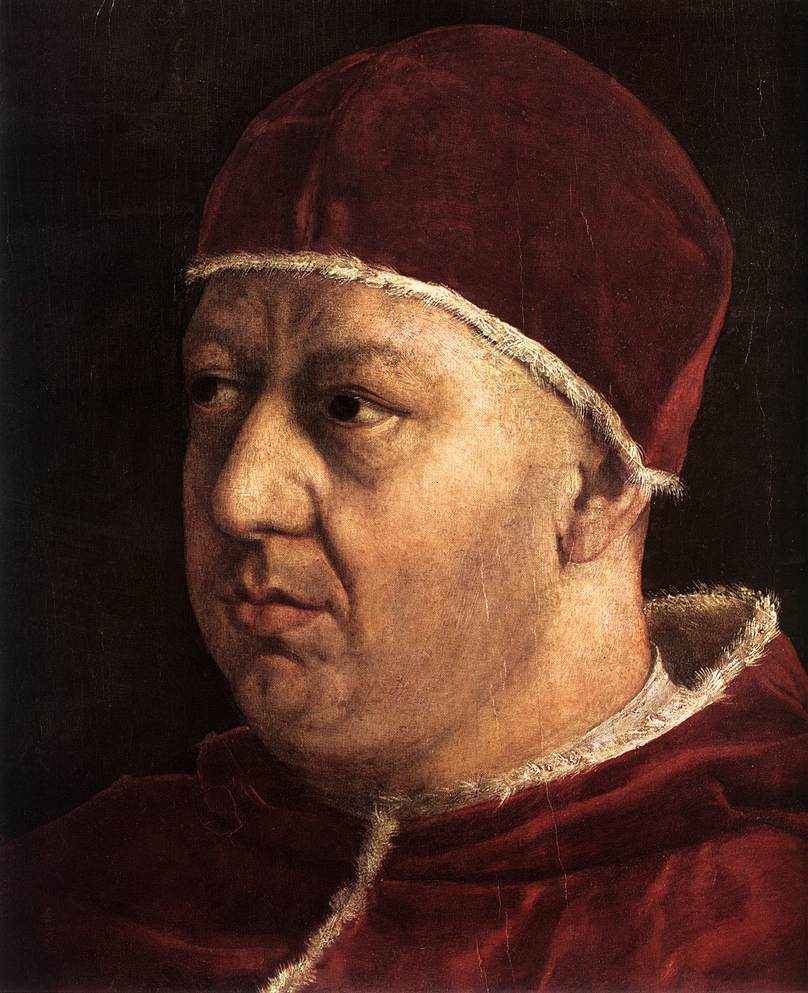
In today’s world, one of the most successful heresies is the heresy of Protestantism. This heresy has its beginning in 1517, when Martin Luther nailed his disputatio pro declaratione virtutis indulgentiaru, or his Ninety-Five Theses unto the door of the All Saints Church in Wittenberg, Saxony (now Germany), in an effort to start a dialogue regarding several perceived abuses within the Holy Mother Church and Her clergy. This entirely reasonable call for discussion started a back-and-forth between Luther and his followers, and the Holy Mother Church, as led by Pope Leo Xi. Leo acknowledged several of Luther’s complaints, but also demanded that Luther retract forty-one errors that were seen as irreconcilable with the teachings of Sacred Tradition within a certain period of time. When this time expired, Luther performed the dramatic gesture of burning both his copy of the Papal Bull making the demand, as well as several volumes of Canon Law, the ecclesiastical law of the Holy Mother Church, reportedly saying, “Because you have confounded the truth of God, today, the Lord confounds you. Into the fire with you!”

Needless to say, this direct act of rejection of the pontifical authority, as well as the heretical rejection of the authority of Sacred Tradition were considered unacceptable, and constituted schismatic acts. From this, we see the beginnings of the Protestant movement. This movement grew in popularity for reasons we shall examine in another article, and became one of the most successful heresies in the world.

As we look at these heresies from a modern perspective, we see an overwhelming amount of diversity; from the comparatively ceremonial and hierarchical Anglican Communion, to the charismatic and zealous Pentecostal movement. However, throughout the vast majority of Protestant movements, there are several unifying factors. These are known collectively as the Five Solas, or, in English, the Five “Alone”s. By name, they are, sola Scriptura (by Scripture alone), sola fide (by faith alone), sola gratia (by grace alone), solus Christus (Christ alone), and soli Deo gloria (glory to God alone).

This article is the first of a series of five examining what these Solas mean in their various incarnations, and whether or not they err, as well as some of the reasons that many men seem so eager to comply with these doctrines. It is our hope that the reader shall see these articles for what they are, not a blind attempt to condemn the practitioners of the protestant movementii , but rather, an attempt to dialogue and expose errors of which many modern Protestants may not be aware, or at the very least, haven’t thought about in detail, which is to say, what we do, we do in our charity, with loving intentions. To further this end, we shall look at these Solas from a rational and sober standpoint, the first of which being sola Scriptura.

Sola Scriptura is a very interesting doctrine, and one to which the reader may not even be aware that he subscribes. Often, Catholics, in our various discussions with members of Protestant denominations come across the argument that whatever it is that we are saying “Isn’t in the Bible.” This argument seems superficially convincing to many modern men, and is a direct consequence of the doctrine of sola Scriptura. Simply put, the doctrine of sola Scriptura in its strongest form is, “All extrascriptural doctrines are, by virtue of them being extrascriptural, false.” This can be phrased in an equivalent form, “Sacred Scripture is exhaustive when it comes to doctrinal truth.”

This argument is one with which faithful Catholics take grave issueiii. In the Catholic communion, we have what can be accurately deemed a superset of Sacred Scripture called Sacred Tradition, which has for two Millennia been the basis of our beliefs and ideas, and indeed, predates Sacred Scripture by approximately four centuries, as well as the episcopacy, which is essentially the hierarchical structure of the Holy Mother Church, as led by Her Bishops, which actually was the force that begot Sacred Scripture as we know it today.iv

Let us look at the way that sola Scriptura in its strongest form, ultimately fails. The simplest argument is that it is self-contradictory. We lay this out:

I. Sola Scriptura holds that all extrascriptural doctrines are false. (definition)
II. Sola Scriptura is a doctrine. (premise)
III. Sola Scriptura is not indicated by Sacred Scripture. (premise)
IV. Sola Scriptura is an extrascriptural doctrine. (by definition of extrascripturalv and conjunction introduction from II, and III)
V. Sola Scriptura is false. (Modus Ponens by I and IV)

We can clearly see from this argument, that if II and III hold, then the conclusion V is conclusively true, given the standard rules of logic. Thence, our goal is to demonstrate the validity of II and III. To further this goal, we examine the definition of Doctrine, as used in this context, “a particular principle, position, or policy taught or advocated, as of a religion or government.” To show that this is a doctrine, we simply have to prove that it is advocated by Protestantism, which is trivially done. As such, we have shown that II is true by definition.

This leaves us with the most significant issue, showing that III is true. In order to conclusively prove this premise, we should have to examine each and every individual verse contained within the full canon of Sacred Scripture, and all the interpretations thereof, to show that they are irrelevant to the doctrine, which, while a worthy endeavor, is significantly beyond the scope of this article. Therefore shall we content ourselves to examine the verses which may superficially appear to falsify III. However, because of the non-exhaustive nature of this exercise, the reader is encouraged and challenged to find verses which may support sola Scriptura on his own, and, if a convincing argument is found, to forward it to us for explanation or rebuttal.

One of the common verses cited in support of sola Scriptura is 2 Timothy 3:16-17:
“All scripture, inspired of God, is profitable to teach, to reprove, to correct, to instruct in justice, that the man of God may be perfect, furnished to every good work.”
Proponents of sola Scriptura argue that this verse claims that the Sacred Scripture contains every doctrinal truth, so we shall take a look at this claim in greater detail. The only portion of this verse that seems to imply exhaustiveness is “furnished to every good work.” However, this immediately and trivially demonstrates itself to be completely irrelevant to the actual claim of sola Scriptura which is that Sacred Scripture is exhaustive with regards to doctrinal truth. Let us look at this verse piece by piece.

“All scripture, inspired of God, is profitable. . .” The claim that all scripture is inspired of God is definitely not one with which any Catholic would hold an objection, but what exactly is meant by “profitable”? Is it that it is in any way exclusive with regards to extrascriptural teachings? We now look at the original Greek word that has been translated as profitable, which is ophelimos. Ophelimos is best translated as “useful,” which indeed is synonymous, in this sense, with “profitable,” but is a great deal clearer. Useful underscores the fact that there is more to doctrinal truth than what is writ. Just as it is useful to read a text on Abstract Algebra when studying Mathematics, or useful to know the Greek alphabet when studying Greek, so is it useful to know Sacred Scripture. However, useful does not in any sense of the word imply exclusivity. One cannot say, “It is useful to use training wheels when teaching a child how to ride a bicycle,” to mean, “One may only teach a child to ride a bicycle with training wheels.” The very concept is absurd.vi

We continue with our analysis of this verse. “. . . to teach, to reprove, to correct, to instruct in justice, that the man of God may be perfect,” No Catholic takes issue with the fact that Sacred Scripture teaches, reproves, corrects, instructs in justice, or begets perfection. In fact, as a subset of Sacred Tradition, these are some of the explicitly expected purposes of Sacred Scripture. However, when one uses perfection in the context of complete knowledge of doctrinal truth, a Catholic begins to balk.

It is very apparent that perfection, as used in this context, is not total perfection, which is to say, one shouldn’t expect to become omniscient or omnipotent from reading Sacred Scripture, things which are encompassed in total perfection. So what sort of perfection is meant by this verse? It is very apparent that what is meant is moral perfection, which is necessary to enter the kingdom of God. How does one become morally perfect? By never sinning, given complete knowledge of all wrongdoings? Decidedly not, unless one happens to be the Son of Man, in which case, Scripture is hardly necessary to him. Rather, we obtain perfection only through forgiveness of sins, and more specifically, through the Sacrament of Penancevii, the basis of which is set forth within Sacred Scripture. It is very clear, given that there is only one way to obtain perfection, that it is to this that Sacred Scripture refers, not to exhaustive documentation of all doctrinal truth.

We conclude our analysis with what appears to be the strongest champion of exhaustiveness, indeed, the only one that can be taken, even superficially, to be exhaustive, “. . . furnished to every good work.” What exactly is meant by this final portion? That Sacred Scripture is exhaustive with regards to knowledge begetting good works? Rather, it shows that Sacred Scripture is profitable (i.e., useful) in making a man furnished to every good work. The structure of the verse is as follows: One teaches, reproves, corrects, instructs in justice for the purpose of making the man of God perfect and furnishing him for every good work. Sacred Scripture is profitable for the purpose of teaching, repoving, etc. . . and thus is profitable for making a man perfect, and furnishing him for every good work. The verse in no way implies that it is the sole source for furnishing him to every good work, but merely a useful one.

Having shown that the verse does not in any form support sola Scriptura, we should like to show that nearly immediately preceding the verse is 2 Timothy 3:14, which very clearly argues against sola Scriptura:
“But continue thou in those things which thou hast learned, and which have been committed to thee: knowing of whom thou hast learned them”
Saint Paul here makes an appeal to Sacred Tradition, including Sacred Scripture, as he speaks in general terms. It is evident that he does not refer to all things “which thou hast learned” in any sort of universal sense, as it would be immoral and inconsistent for him to, say, advocate continuation in sin, which men of that era, as our own, obviously have learned. But rather, he makes it obvious that we are to continue what we have learned if we “[know] of whom thou hast learned them,” i.e., if the source is a reputable authority (with the ever-present implicit clause that what we have learned does not contradict any infallible moral teachings, which is to say, Sacred Tradition, including Sacred Scripture).

One of the next most common verses to defend sola Scriptura is Apocalypse 22:18-19:
“For I testify to every one that heareth the words of the prophecy of this book: If any man shall add to these things, God shall add unto him the plagues written in this book. And if any man shall take away from the words of the book of this prophecy, God shall take away his part out of the book of life, and out of the holy city, and from these things that are written in this book.”
This section is very easily refuted, as New Testament canon had not been collected into a book at the time of writing, and not for another four hundred years thereafter, Saint John cannot have possibly meant the entire canon. John refers to the prophecy of this book, and not the teachings, which further supports this argument, for Apocalypse is unique in that it is nearly entirely a prophecy, albeit one with a great deal of instruction, whereas the rest of the New Testament canon is not primarily prophetic, but rather instructional.

Having refuted the primary verses offered in support of sola Scriptura, we have shown that premise III from our argument holds, although we do note that several other verses exist in support of sola Scriptura, we hold that they fall victim to similar arguments, which can be given for a particular verse upon request. If logic alone does not convince the reader, then we shall end our article with exposition as to scriptural support for arguing against sola Scriptura, and a brief note about the less strict definition of sola Scriptura, or “prima Scriptura.”

Saint John 20:30 is rather explicit in saying that not all of the signs of Christ were recorded:
“Many other signs also did Jesus in the sight of his disciples, which are not written in this book.”
This means that there exist acts of Christ outside of scripture, i.e., extrascriptural acts of Christ, which are doctrinally true. This immediately contradicts Sola Scriptura, which, per the definition, would argue they never occurred, by virtue of them being extrascriptural. Likewise, we have Saint John 21:25:
“But there are also many other things which Jesus did; which, if they were written every one, the world itself, I think, would not be able to contain the books that should be written.”
This verse not only states that there are true extrascriptural acts of Christ, but that they vastly outnumber the scriptural acts of Christ, which is entirely consistent with the idea that Sacred Scripture is a subset of Sacred Tradition, and in fact, strongly supports it.

It should be known that numerous other verses exist that likewise, given proper interpretationviii, conclusively prove that there exists true, extrascriptural doctrinal truth, however, given the limited scope of this article, they are not recorded here. (Not to say this article isn’t profitable to read, it’s just non-exhaustive.)

We conclude our article with a note on the less strict interpretation of Sola Scriptura, which is that nothing may ever contradict Sacred Scripture, but there do exist extrascriptural truths. This interpretation, referred to here as prima Scriptura, is entirely consistent with Catholic beliefs, in that Sacred Scripture is a subset of Sacred Tradition, and Sacred Tradition, in order to be meaningful, cannot contradict anything contained within it. As Sacred Scripture is contained within Sacred Tradition, it is very clear that Tradition cannot contradict Scripture.

It is our honest wish that the reader meditate on this article and look at his beliefs honestly and fairly and, if he finds a rebuttal, that he give it to us, that we may discuss and approach the truth.

Yours in faith,


Johannes van Liempt


i. See Exsurge Domine for Pope Leo X’s response to the 95 Theses. Further, note that a later article series will deal with the objections brought forth within the 95 Theses, in the interest of furthering discussion and approaching the truth.
ii. St. John 3:17
iii. Not to say there aren’t “Catholics” who would agree with this argument, but more that it is antithesis to the teachings of the Holy Mother Church.
iv. The New Testament canon was not established until the Synod of Hippo, under St. Augustine, although Athanasius, from whom this blog receives its name, did accurately predict the precise set of texts that would become the New Testament canon.
v. Extrascriptural is defined as “not indicated by Sacred Scripture”.
vi. Titus 3:8 and 2 Timothy 2:21 fall victim to the same demonstration of the meaning of profitable.
vii. The necessity of the Sacrament of Penance will be demonstrated in a later article, until then, feel free to ignore this bit.
viii. Which is to say, interpretation not misguided by the heresy of individualism; more about this heresy in a future article.